
The short version
A chatbot is usually a scripted or narrowly configured conversation. An AI agent can interpret intent, use tools, and complete tasks. A Human-Enhanced Agent adds a human-owned layer: curated knowledge, brand voice, explicit guardrails, and human review.
| Type | Best for | Main limitation | What to ask before buying |
|---|---|---|---|
| Chatbot | Simple FAQs, routing, forms, and scripted flows. | Can break when the visitor leaves the expected path. | How easy is it to update the flow when questions change? |
| AI agent | Interpreting broad intent, using tools, and completing repeatable tasks. | Can over-act or over-answer without clear governance. | What can it do, what can it not do, and how do humans audit it? |
| Human-Enhanced Agent | Representing an organization with owned knowledge, voice, skills, and review. | Requires thoughtful content and policy setup. | Can the team see the sources, state, handoff, and action path? |
What is a chatbot?
A chatbot is a conversational interface that helps users follow a defined path. Classic chatbots ask questions, present buttons, collect fields, and route users to an answer or human.
That can be enough for simple support, appointment booking, lead capture, or navigation. The weakness appears when visitors use unexpected wording, ask for judgment, or need guidance across several sources.
What is an AI agent?
An AI agent can do more than respond. It can interpret a goal, decide on steps, call tools, retrieve information, and sometimes perform actions. Customer service platforms, CRM suites, and agent builders increasingly use this language because the system can move work forward.
The risk is that "agent" can become a marketing word. A real agent needs defined permissions, connected knowledge, action boundaries, observability, and a clear fallback when confidence is low.
What is a Human-Enhanced Agent?
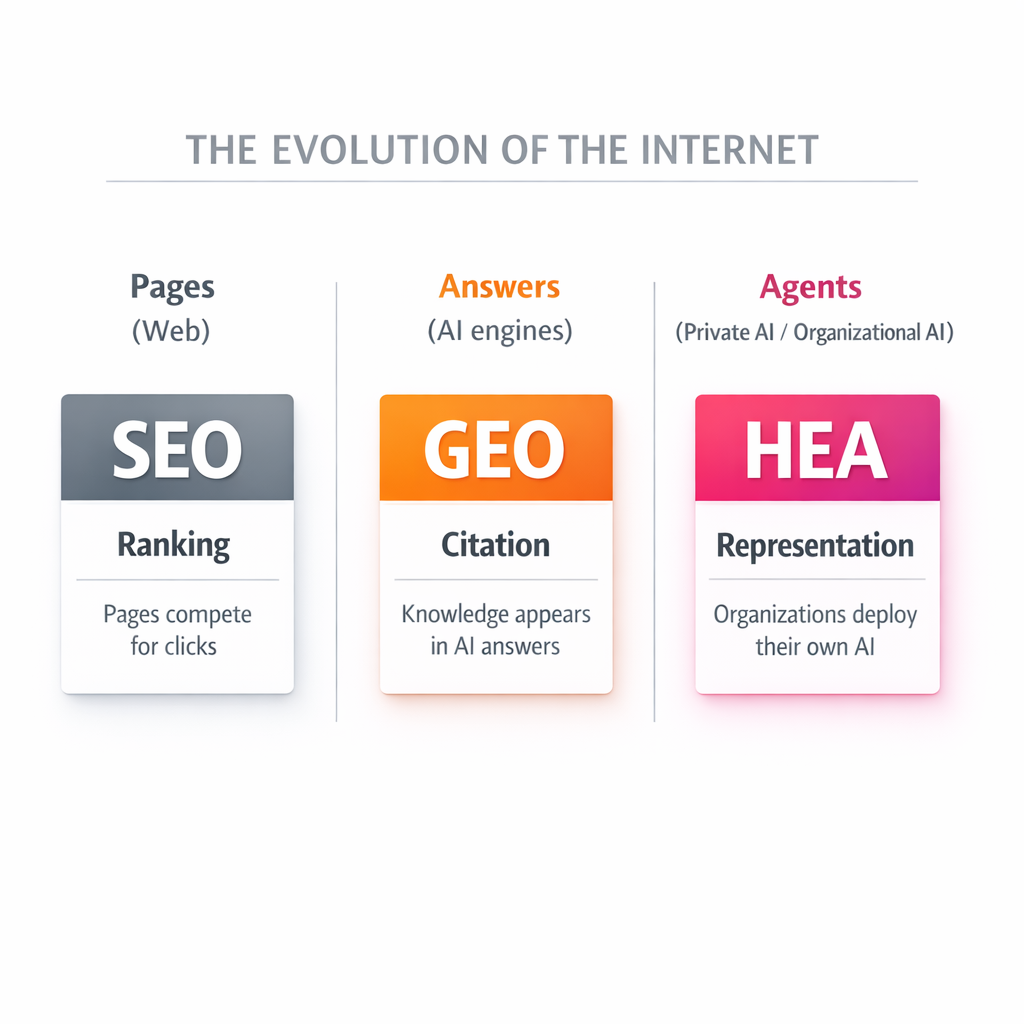
An HEA is an AI agent designed to represent a specific person, brand, or organization. It is human-enhanced because humans shape the knowledge, voice, goals, skills, and review process.
The point is not to make the agent sound human. The point is to keep the human organization present in the answer. That includes what the agent knows, what it is allowed to suggest, when it asks for confirmation, and when it hands off.
Which one should you choose?
Choose a chatbot when the use case is narrow and predictable. Choose an AI agent when the job requires interpretation and action. Choose an HEA when the agent will represent your knowledge and reputation in front of real visitors.
For a website, the HEA pattern is often the most complete: it can answer from trusted content, guide people through decisions, and keep the business honest about what the agent is allowed to do.