
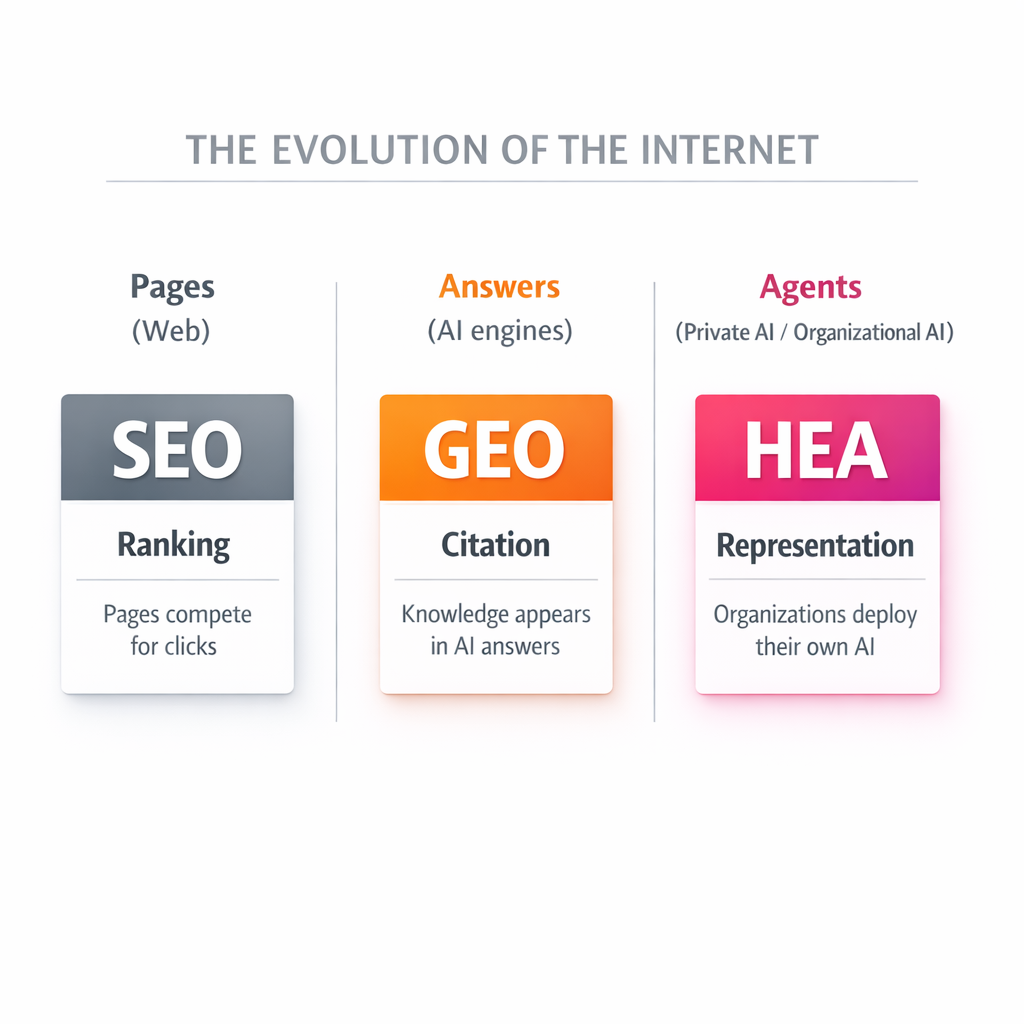
The problem nobody talks about
Every website owner has been told to "add AI." The market offers two main defaults: legacy chatbots (scripted, button-driven, mostly unchanged since 2018) and generic LLMs (broad, impressive, but built to serve everyone — not your organization).
Both fail in predictable ways. Understanding those failure modes is the first step toward choosing something that actually works for your visitors, your brand, and your pipeline.
Four problems with legacy chatbots
1. Lousy experience
Tired of bots that feel like machines? Your visitors are, too. Legacy chatbots follow decision trees. The moment a visitor asks something outside the script, the experience breaks. They get routed to an irrelevant FAQ, asked to rephrase, or handed a "Sorry, I didn't understand that."
Your visitors deserve a conversation that sounds like you — not a script.
2. Lost to LLMs
Your prospects are already asking generic AI about your products instead of visiting your website. They paste your company name into ChatGPT and get a summary you never approved, based on data you never reviewed, with claims you might not endorse.
If your own website still relies on a scripted bot, you are handing that conversation to someone else's AI. Take back the conversation with an agent trained on your knowledge.
3. Blind guessing
Stop guessing what your visitors are looking for. Legacy chatbots collect button clicks, not intent. They cannot tell you why someone visited, what they compared, or what concern held them back.
A governed agent surfaces real intent from real conversations — so you know what matters.
4. Weak pipeline
Visitors browse and leave. A chatbot might capture an email if the visitor fills out a form, but it rarely qualifies intent, books a meeting, or hands off context to a human.
Governed skills turn every conversation into contacts, bookings, and qualified leads — automatically.
Four problems with generic LLMs
5. Generic AI, generic voice
Chatbots that sound like everyone else erode trust. Your audience expects your voice, not a template. A generic LLM writes fluent, polished text — but it sounds like every other LLM-powered interface on the internet.
When your AI sounds generic, visitors assume your business is generic, too.
6. Brand drift
Without guardrails, AI goes off-script. Generic LLMs do not know your messaging boundaries, your pricing policy, your compliance requirements, or the topics you deliberately avoid. One hallucinated claim or off-brand answer can undo months of careful positioning.
HEAs stay aligned with your tone, values, and messaging — because humans set the guardrails before the agent speaks.
7. Zero governance
Most AI tools have no audit trail, no compliance layer, and no transparency. Who reviewed the answer? Which source was used? Can you prove the agent stayed within policy?
In the EU AI Act era, "it's just AI" is not a defensible answer. HEA is built with governance from day one — approved content, observable behavior, and full auditability.
8. Low conversion
Visitors leave without acting. A generic LLM might give a good answer, but it has no mechanism to capture a lead, suggest a next step, book a call, or route a high-intent prospect to the right person.
Governed skills transform passive answers into active outcomes: contacts, bookings, content leads, and CRM entries — without breaking the conversational flow.
What organizations actually need
The gap between legacy chatbots and generic LLMs is not a feature gap — it is a governance gap and an ownership gap. Organizations need an AI representative that is:
- Knowledge-grounded — answers drawn from approved, curated content, not the open internet.
- Brand-aligned — voice, tone, and messaging that reflect the organization, not a generic model.
- Governed — explicit rules about what the agent can and cannot do, with full observability.
- Conversion-ready — structured skills that capture leads, book meetings, and hand off with context.
How Human-Enhanced Agents solve each problem
| Failure mode | Legacy chatbot | Generic LLM | Human-Enhanced Agent |
|---|---|---|---|
| Lousy experience | Script breaks on unexpected input | Fluent but off-topic | Natural conversation from owned knowledge |
| Lost to LLMs | Cannot compete with AI answers | Gives uncontrolled answers about you | Your AI, your knowledge, your rules |
| Blind guessing | Button clicks, not intent | No structured insight capture | Real intent from real conversations |
| Weak pipeline | Form fills at best | No conversion mechanism | Governed skills: leads, bookings, handoff |
| Generic voice | Robotic, scripted | Fluent but interchangeable | Your voice, tone, and personality |
| Brand drift | Rigid but limited | No guardrails, can hallucinate | Human-set boundaries and approved content |
| Zero governance | No audit trail | No compliance layer | EU AI Act posture, full auditability |
| Low conversion | Passive routing | Answers without acting | Structured actions inside the conversation |
The bottom line
Legacy chatbots and generic LLMs each solve half the problem — and create new ones. Chatbots are controlled but rigid; LLMs are flexible but uncontrolled. Neither represents your organization with the knowledge, voice, governance, and conversion capability your visitors expect.
A Human-Enhanced Agent closes both gaps. It is built from your content, speaks in your voice, follows your rules, and turns conversations into outcomes.
Your AI should represent you — not replace you, and not sound like everyone else.